Sunday, July 13, 2014

Calvin and Hobbes Documentary Deserves a Failing Grade

   
     My favorite comic (by an extremely large margin) has always been Calvin and Hobbes created by Bill Waterson. So naturally I was extremely excited when I saw the documentary Dear Mr. Waterson available on Netflix. I really wanted to enjoy this documentary but as much as I tried I kept hoping for excuses to attempt beat level 451 on Candy Crush instead.
     This post will be necessarily short as there is so little to say about this documentary. I had expected a documentary discussing the legacy of Calvin and Hobbes possibly interviewing Mr. Waterson himself. Perhaps discussing his childhood or other possible inspiration. I would have liked to know what he thinks about modern comics, the deaths of the newspaper, and the birth of digital media. At the very least, the title of the film led me to believe that there would be an exchange of letters between the filmmakers and the author. I was almost fully disappointed.
   This documentary is essentially an hour and a half collection of interviews by fans and other comic authors talking about how much they like Calvin and Hobbes and wish they could meet/collaborate with Mr. Waterson. These interviews are interspersed with extremely boring footage of the director of the film Joel Schroeder as he explores libraries and fingers through his personal Calvin and Hobbes collection. They don't even show a picture of Mr. Waterson (Apparently only one has ever been taken.)
The only interesting information given in this film is the discussion as to why there has never been any licensing of the Calvin and Hobbes characters into toys or a television show.
   No doubt the director of this film, when he started the Kickstarter campaign to make the documentary, had hoped to explore some of the same things that I was hoping to see. He must have underestimated the privacy of Mr. Waterson who has been described as the Bigfoot of comic authors. There is only one known photograph of him afterall.

Wednesday, July 2, 2014

Will You Believe Your Eyes?

   
    My sister Elisha recommended The Imposter to us and Hannah chose it as our documentary for the week. The Imposter is a 2012 film, directed by Bart Layton, who is best known for his National Geographic Television show Locked Up Abroad. This film tells the story of Frederic Bourdin (Twitter, Facebook), who impersonated the kidnapped Nicholas Barclay to his family.  This film is sad on many levels but is a very interesting exploration of epistemology and criminal science.
   In 1994, thirteen year old Nicholas Barclay, was abducted while walking home from playing basketball in San Antonio, Texas. Though the police did a thorough investigation his fate is unknown to this day. Three years later in 1997, Frederic Bourdin was discovered in a small town in Spain and was taken to a home for abandoned children. Bourdin, who was attempting to find a place to stay, answered very few questions. All he said was that he escaped from a sex trafficking ring. When he was pressed for his name and information about his family he insists that he contact them himself. He then called police offices in the United States and asked for information about missing children, trying to find one that he could impersonate. He happened upon Nicholas Barclay's case and determined by looking at a faxed (black and white) missing person flyer that he looks enough like Nicholas to impersonate him.
He later finds out that Nicholas has blond hair and blue eyes and is panicked that he will be caught. He makes up a story that the traffickers beat and tortured him and injected his eyes with chemicals to make them change color. He even goes so far as to convince one of other children in the home to give him the tattoos that Nicholas is reported to have using a needle and a pen.  When his "sister" arrives and officially identifies him despite the discrepancies, he is shocked.  Bourdin convinced several officials including the United States Consulate to Spain and the FBI that he was in fact Nicholas and he was given an American passport and was allowed to travel "home" to San Antonio with his sister. Nicholas's family accepts him as their own despite the evidence to the contrary and the story of Nicholas's return to his family makes national headlines.  As if the story was not interesting enough a private investigator named Charlie Parker (Think: an old version of Shawn Spencer, equally as comic),
notices on a television interview that Bourdin's ears do not match those of Nicholas. He alerts the FBI (believing that Bourdin is in reality a Spanish spy) to the detail that they missed and they use DNA and fingerprints to determine Bourdin's real identity. After he was arrested, Bourdin asserted that the Barclay family had killed their own son. The FBI launched a new investigation which was eventually closed when no new evidence could be found.
   The beauty of this documentary is that it is an exploration of epistemology. Rather than spelling out actual facts the filmmakers use interviews that contradict one another and are often quite hard to believe to tell the story. The audience is then asked to make their own determination on what happened to Nicholas Barclay. Was the Barclay family so duped by their desire to see their son and brother alive that they overlooked glaring evidence that Bourdin was not who he claimed to be, or conversely, did they accept Bourdin into the family as a way to get away with murder?
   This film is very interesting but it has one significant drawback in that it is dramatized by a cast of actors as the interviews are playing out. Personally, I think this detracts from a documentary film in that you cannot study the faces of those who are giving information. It also cheapens the medium to cater to those who prefer entertainment over information and reason. That being said, this was an excellent film and is recommended.

Sunday, June 29, 2014

Happy New Year! Welcome to 1984!


    This television commercial, directed by Ridley Scott is widely considered to be the best ever made. It introduces the MacIntosh computer as the first personal computer with a graphical interface. This ad depicts a woman destroying the iconic "Big Brother" from George Orwell's iconic novel 1984, which is a criticism of government intrusions upon personal privacy. The woman in this ad represents Apple's new computer. The implication is that Apple and their computer are cool because it stands against conforming to "the man". Since then Apple has come along way, making some very ingenious products and literally creating whole new styles of life. They have also become a company that assists in the very thing they were attacking in this ad.
     Based upon the recommendation from the This Week in Google podcast (HODOR! #253) I recently viewed the episode of Frontline entitled The United States of Secrets on YouTube. I have included l both episodes at the bottom of the page. While this is not the documentary that Hannah and I chose this week it was very informational and highly recommended. It also informed the documentary that we did choose, which was called Terms and Conditions May Apply. This film was very good and serves as a supplemental to what we have already learned from whistleblower Edward Snowden.
   Terms and Conditions May Apply was written and directed by Cullen Hoback and discusses two major points; First, we often do not know what we are signing when we agree to the Terms of Service put out by major media companies such as Google, Facebook, Apple and AT&T among many others. The second point is that while we might trust that these corporations might not have malicious intent, the government likely also has access to this information.
    Let's consider Google as an example of what this is documentary is trying to say. Google is arguably the most useful of these companies that we come into contact with on a daily basis and it is 99% free of charge. Google Search is free. Google Maps are free. The personal assistant mobile app Google Now is free. So is Google Drive, Gmail, Google Scholar, Google Calendar, Google Translate, Google News, Google Wallet and YouTube. If you use Google Plus you get excellent and yet still free automatic photo editing. You are reading this blog thanks to a free Google service.  This is not even scratching the surface of the the Android ecosystem which is a major component in the growing economies of the third world. In return, we hand over a truly frightening amount of information to Google that they then use to tailor make ads for us. For instance, if you use a smartphone, Google most likely knows where you are 24 hours a day. They know where you live and how much money you make. They know your phone number and who your best friends are and what their phone numbers are. It is estimated that the amount of data we give to Google is worth (to them) somewhere between $500 and $5000 depending on your usage. Most of this is common knowledge because Google has generally been very upfront about gathering and storing information about us.  What many people do not know however is that almost all internet companies are doing the exact same things and are not being nearly as upfront as Google has been.
      For instance, Apple also tracks locations in every iPhone ever made. Facebook knows where you live and quite literally knows everything about your friends. Yahoo Mail also "reads" or electronically scans your email in ways identical to the way Google does so. 

     What is much more frightening (at least to me) is that the government also has access to this information. This documentary was released a month after Edward Snowden made his disclosures about the National Security Agency and therefore did not make any mention of him. The Frontline documentary went into much more detail about Mr. Snowden and the links between internet companies and the NSA. Terms and Conditions May Apply did assert many of the same things that were later proven by Mr. Snowden. Specifically it asserted that the NSA had backdoors into major internet providers like AT&T and Verizon and that they were actually copying information as it passed through their internet hubs. This film also discussed the now infamous National Security Letters that forced companies like Google, Facebook and Yahoo disclose user information without a warrant and without the knowledge of the user.
      Whatever you might think of Google, Facebook and Apple they have now become necessary. If Google were to have a worldwide failure across all its services for even one day we would see a major economic impact. We can literally no longer live without these companies. The National Security Agency wiretapping is another matter. Whatever you might think of this, one thing is clear; we no longer have any sort of privacy. Happy New Year, welcome to 1984. We must now assume that all our digital traffic is being tracked and stored, we must assume that our phone calls are being listened in on. Both Terms and Conditions May Apply and the Frontline United States of Secrets are recommended viewing and I hope we will take these issues under consideration the next time we have an opportunity to vote.


Sunday, June 15, 2014

Would Anyone Consider you a Hero?

 
    This week Hannah and I watched the HBO documentary Superheroes on Netflix. On the surface this film was exactly what you might expect; a collection of people who many might consider unbalanced, running around the city streets, in the middle of the night, in costume, on the off chance that they might be able to prevent a crime or help someone in distress. However, I believe there is something deeper that we might be able to learn from this film.
    The documentary follows several self proclaimed "superheroes" some of whom have even started groups of costumed crusaders who monitor crime and attempt to help people around the clock. They call themselves Real Life Superheroes and use the acronym RLSH.  Each of these people have a costume, most carry weapons, train quite a bit and some even believe that they have super powers. To protect their hidden identities they make up their own names such as Dark Guardian, Amazonia, Master Legend, Mr. Xtreme, and my personal favorite Apocalypse Meow. We see these heroes training in combat, and patrolling the streets of their cities doing their best to help people. Stereotypically, the documentary also shows the police trying to politely discourage this behavior.
   One thing this documentary did not well show is how well these RLSHs are at helping people and preventing crime. There was some footage showing one of the heroes helping a homeless man who had just had his foot run over by a car. The same group of heroes later witnessed a hit and run by a drunk driver and were able to take his keys away from him for the night. They also called the police, who simply drove on by for some unknown reason. There was also one short anecdote at the beginning about a crime that was prevented but it lacked enough detail to determine if it was a true story.
       With the efficacy of these superheroes in question many people would consider this behavior at least strange and at most dangerous and psychotic. I would like to suggest that these people are simply expressing their individuality and hoping to change the world into a place where the evil are punished and the good are glorified. These RLSHs often actually have a very real and positive impact on the homeless with whom they interact on a daily basis. Many of them raise money for homeless charities or hand out care bags purchased from their own money.
Just like about everyone else, these people want to be seen as a force for good in the world rather than just an onlooker. I would dare to say that many of us do not even try to be an active force for good. We all have heard of the bystander effect, and the story of Kitty Genovese who was murdered in Queens, New York in front of over 30 people who did nothing to stop the crime. Most of us hear that story and say that we would never allow that. Real Life Superheroes hear that story and take the next step designate themselves as the person to take the responsibility that no one else wants.

Sunday, June 8, 2014

The Last Gladiators


    This week, in honor of the Los Angeles Kings being in the final for the 2014 Stanley Cup, Hannah and I watched a documentary called The Last Gladiators. This film considers the "Enforcer" position in hockey, and features Chris "Knuckles" Nilan, an enforcer for the Montreal Canadiens, the Boston Bruins and the New York Rangers between 1980 and 1992.
     Those who are not fans of hockey may not know how brutally violent the game really is. I would go so far as to say it is the most violent of the North American team sports, much more so than football or lacrosse. This violence is aggravated by the speed at which the players move and the fact that they are are surrounded by solid glass walls. Furthermore, the rules against fighting used to be much more lenient than they are today, to the point that fighting (outright gloveless boxing) was a regular part of the game that many fans looked forward to. Even today teams will classify their players into two kinds. First there are the finesse players. These players are experts at skating and hockey maneuvers, and are usually smaller and are very quick on the ice. Their job is to get the puck in the goal and past the three or four players who are trying to stop them. Since there are very few rules against violence in hockey, the opposing team will do their best to intimidate, frighten and hurt these finesse players. They will crash into them at high speeds, slam them into the walls and otherwise throw them off their game. The second classification of players is popularly termed "Enforcers". The job of an enforcer is to protect the finesse players from physical attacks from the opposing team. If the opposing team manages to get to the finesse players the enforcers often will physically beat the offending adversary. As a result hockey players often break arms, noses, ribs, as well as suffer concussions and lose teeth. There have even been several hockey players who have died as a result of injuries on the ice.
    In 2004 and 20005 there was a lockout in the NHL that resulted in several rule changes that decreased the number of fights that occurred during the games. The long term effects on retired players was a major factor in these changes. It had been seen that former professional hockey players had experienced traumatic brain injuries that left them susceptible to depression, suicide and substance abuse among other things.

    The Last Gladiators explores these things through the life of Chris "Knuckles" Nilan from his childhood to his retirement and documents his struggles both on and off the ice.
We see his fights on the ice and his even more difficult fight to stay sober after he retired. One of the most fascinating things we see is interviews with his still estranged family (with particularly emotional testimony from his green beret father) about how they felt betrayed by Nilan's addiction. Today Nilan is a sports radio host in Montreal and has reportedly stayed sober since his third stint in rehab in 2010. He wrote a very interesting book which was published in 2013 called Fighting Back: The Chris Nilan Story, which talks about everything from his hockey career to his struggles with drugs and alcohol to his guns drawn encounter with "Whitey" Bulger, on whom the movie The Departed is based.
    While The Last Gladiators may not be everyone's first choice when choosing a Netflix documentary it improves upon the usual sports documentary by showing a real life struggle with the world's fastest spreading disease: addiction.

Saturday, May 31, 2014

Narco Cultura - Who is Dying in the War Against Drugs


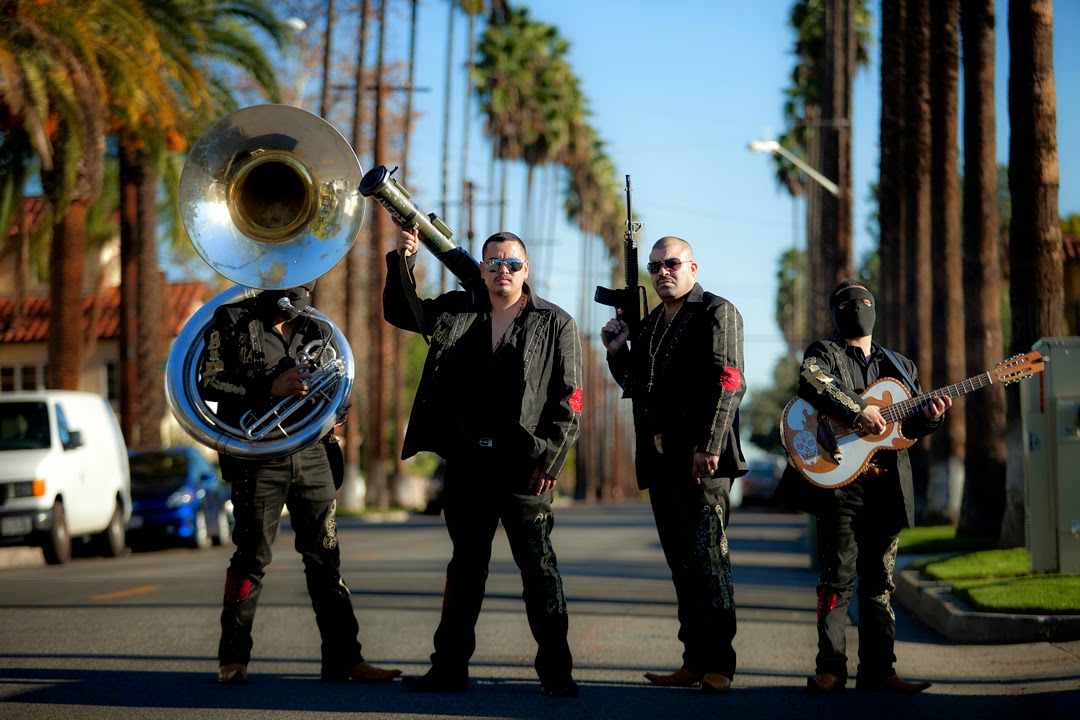
        One of the most fascinating documentaries that Hannah and I have watched this year has been Narco Cultura, which explores perception of the illegal drug trade from the point of view of our neighbors to the south as well as hispanic populations in the southern American states. It follows the doings of Edgar Quintero a member of a "Norcocorrido" band and Richi Soto, a crime scene investigator from the Juarez branch of Mexico's DEA.
    This documentary was beautiful, the cinematography especially was significantly better than what I have come to expect from a documentary. Combine that with the fascinating lives of those involved and we have a documentary that should have been nominated for Best Documentary. Take for instance the life of Edgar Quintero, a young hispanic man who lives in Hollywood with his wife and two small children. He is the member of a band called Buknas that specializes in music glorifying the latin american drug trade.
In addition to this he writes drug anthems for various gang leaders graphically boasting about the atrocities that they have committed. In the first scene Quintero is shown discussing with a dealer what caliber gun he carries and asking him what he wants put in his song. He later sings the song for the dealer and receives a significant amount of money (several thousand dollars) in return. He then returns home and tells his wife that the money is savings and she promptly stashes it in drawer. Through the documentary we see him in various music video shoots and concert venues sporting various weaponry as his band sing their drug ballads. To him the drug trade is indirectly his bread and butter. He sees the cartels as Robin Hood and his merry band of thieves that provide for the poor of Mexico as they fight the sheriff and the government. He supports his family and does very well by writing and singing their drug anthems.


     Contrast this with Richi Soto, a combination of a hispanic Serpico and a fatalistic Hank Schrader. He is a Crime Scene Investigator for SEMEFO (Mexico's version of the DEA) in Juarez Mexico. His job is to investigate the many drug related murders that occur in Juarez. To give some perspective on this, in 2010 there were 3111 murders in the city of Juarez, one mile away in El Paso, Texas there were a total of 5 murders that same year. Lest you think that this low number is simply an outlier in 2011 there were only 16.  Juarez is officially the murder capitol of the world by a wide margin. Soto and his coworkers live in a constant state of fear that one, their coworkers are corrupt and are in the pay of the drug cartels, and two that they will be outright killed by the cartels for doing their jobs. These police officers literally have to wear masks when they go out to crime scenes in an attempt to avoid being recognized. As the documentary was being filmed, one of his coworkers was shot and killed outside of his home, making that the fourth killing in Soto's unit. As the film goes on Soto becomes more and more discouraged and the audience learns that only 3% of the murders he investigates ever leads to an arrest and much less than 1% are ever convicted.
     This was an excellent documentary that should be seen by anyone concerned about the effect of narcotics on our society. I cannot recommend this film highly enough.
   

Sunday, May 18, 2014

Hot Coffee - What to Do About Frivolous Lawsuits (Graphic Burn Photographs)

      In 1994, a woman named Stella Leibeck famously (or infamously) spilled hot McDonald's coffee on herself in her parked car. She then proceeded to sue the McDonald's corporation and was awarded $2.86 million by the jury. Mrs. Leibeck was then derided internationally and became the "poster child" for frivolous lawsuits and tort reform. Just about everyone knows about this case but many people do not know the details. For instance, Mrs. Leibeck originally asked McDonald's to simply cover her medical costs and loss of income which were approximately $18,000. In response McDonald's offered $800. As the lawsuit went forward many attempts were made by Leibeck's lawyer to settle for between $60,000 and $300,000, all of which were turned down by McDonald's. In addition to this, McDonald's coffee had caused over 700 scaldings all of which had been settled by the corporation. During the Leibeck vs. McDonald's trial, a McDonald's executive testified that the losses to the company caused by these scaldings were not significant enough to warrant any change in company policy. It is also not well known that after the jury awarded $2.7 million the judge reduced that amount to a total of $640,000. McDonald's appealed and then settled for an undisclosed amount under $600,000. For those of you who still feel that this was a huge amount, this is a photo of her injuries.

Despite what many might think the temperature at which McDonald's brewed (and still brews) it's coffee is not unreasonable. The McDonald's training manual states that coffee should be brewed at between 180 and 190 degrees fahrenheit. As this is only 22 degrees off of boiling it can cause significant injury if contact with the skin is made. However, this is actually the temperature at which almost all coffee is made. As I was writing this blog I walked up to the barista at the Starbucks I patronize and asked at what temperature the coffee is held. He said, "It is held at between 180 and 190 degrees, but is brewed at a higher temperature." This, and other similar lawsuits, are the topic of the documentary Hot Coffee. The film goes on to argue that tort reform, monetary caps on damages, and mandatory arbitration are all attempts by powerful corporations and the politicians (and judges) they endorse, to take away the right to civil litigation by the everyman. This is a very powerful film that everyone should see. However, the people who do see it should also do their own research and think critically about what they have learned.
     This documentary talks about several different "Exhibits" as if they were presenting evidence in a courtroom and in a sense they are. They are presenting evidence to the courtroom of your mind, where I hope Reason presides. Naturally, you will have to make decisions about the evidence presented for yourself. I believe that this documentary was really trying to present a balanced case with evidence both for and against tort reform. Unfortunately, much of the evidence presented ended up being flawed when everything was put into the light.
     After discussing Mrs. Leibeck and her case, the documentary went on to talk about Mississippi Supreme Court Judge Oliver Diaz, who was attacked during his election campaign by the U.S. Chamber of Commerce for being anti business and anti tort reform.
Despite the attack Diaz won the election but was then indicted on charges of bribery and tax evasion. As portrayed by the film he was acquitted of all charges but not before he was prevented from serving as judge for over two years. This was shown in such a way as to lead the audience to believe that this delay in allowing him to serve was part of a right wing conspiracy to protect corporations from litigation. What was not shown by the film was that while the judge was acquitted of the charges, it was only because his wife plead guilty and was given two years probation. I will allow you to make your own decision on whether or not he allowed his wife to take the fall for these crimes. This also highlights the importance of voting with care and evaluating the sources behind everything you see and hear. Needless to say, this is especially important when considering political attack ads.
      The final portion of the documentary talked about Jamie Leigh Jones and her alleged gang rape by KBR employees while she was serving as a civilian contractor in Iraq. She had signed an employment contract that prevented her from suing her employer and instead called for mandatory arbitration for any disputes. The film followed her attempts to get out of that arbitration as she fought for her day in an actual courtroom. The film stopped filming before she was able to get her day in court, but it did eventually happen. It turned out that there was overwhelming evidence that much of what Ms. Jones had to say was largely made up and she was held liable for much of Halliburton's legal fees.
       Even though the documentary showed poor evidence of the need for tort reform, I do believe it is necessary. In particular there should be much more transparency involved in these disputes. If the public is able to see settlement amounts for instance they will be able to decide for themselves if it was a fair amount. If the legal proceedings are made public, people will be able to see for themselves if a corporation should be held responsible. Despite what many people think there are not that many frivolous lawsuits and those that are frivolous are usually very quickly thrown out. Many of the famous stories that have become viral over the internet are completely made up. Those that aren't generally have extenuating circumstances that many people are not aware of. Juries and especially judges are generally more intelligent than many people will lead you to believe. If we elect the right judges, they will know the proper damages that are due to victims. 

       By far my favorite portion of this documentary was the advice given just before the end. This advice was so fantastic I will post it here as well.
 1. Be a savvy consumer of media - Question whether or not you are getting the full story.
 2. Know your State Laws (Author Edit) - Make your own decision concerning whether caps on damages are appropriate and make sure your views are represented in the state legislature.
 3. Scrutinize Political Ads - Research the agenda of the organization paying for the ad.
 4. Read your Contracts (Author Edit) - Decide for yourself if mandatory arbitration is right for you as an employee and make sure your views are represented in congress.